A child can read the smallest line on the eye chart and still struggle through a page of homework. They might lose their place, reread the same sentence, or complain that words look blurry after a few minutes. At school, it can show up as avoidance, frustration, or “not paying attention,” even when they are trying.
That’s because the classic 20/20 test measures visual acuity at distance. It does not fully capture how well the eyes track across a line of print, shift focus from board to notebook, or work together up close for sustained reading. Hakim Optical has a helpful breakdown of this in what 20/20 vision really means.
20/20 is one skill, reading uses several
Reading is an “eyes plus brain” task. You need clarity, but you also need coordination.
The Canadian Association of Optometrists puts it plainly: reading requires the eyes to focus, track, and coordinate together, not just see sharply on a chart. Those three pieces are often where kids (and adults) get tripped up:
Eye tracking means your eyes can move smoothly along a line and jump accurately from word to word, then from the end of one line to the start of the next. When tracking is off, a reader may skip words, reread lines, or lose their place often.
Focusing is the ability to keep near vision clear and comfortable over time. If focusing stamina is weak, reading can start fine and then get blurry, tiring, or headache-inducing after a short stretch.
Eye teaming is how well both eyes point to the same place up close. If the eyes do not coordinate comfortably at near, reading can feel effortful, and symptoms like double vision or eyestrain can pop up, especially later in the day.
Signs teachers and parents notice first
Most kids do not say “my eyes are not converging well” or “I can’t sustain accommodation.” They describe the experience instead, or they act it out. A teacher may see a bright student who suddenly reads slowly, avoids independent reading, or rushes and makes careless mistakes.
At home, you might notice that reading takes much longer than it should for their grade level, even when comprehension is good once you read aloud. Some kids use a finger to keep their place, drift off the line, or need frequent breaks. Others complain of headaches, tired eyes, or blurry print after a few minutes, then bounce back later.
These patterns can look like motivation issues, attention challenges, or “just not liking reading.” But they can also be a signal that the visual system is working overtime to keep up.
Hakim Optical’s post on assessing your child’s classroom vision notes several real-world signs that show up in learning environments, including losing place while reading, holding books close, and headaches or tired eyes.
What a comprehensive eye exam checks for reading related problems
A reading struggle should never be reduced to one test. A proper assessment looks at both clarity and how the eyes function together at the distances that matter for school and homework.
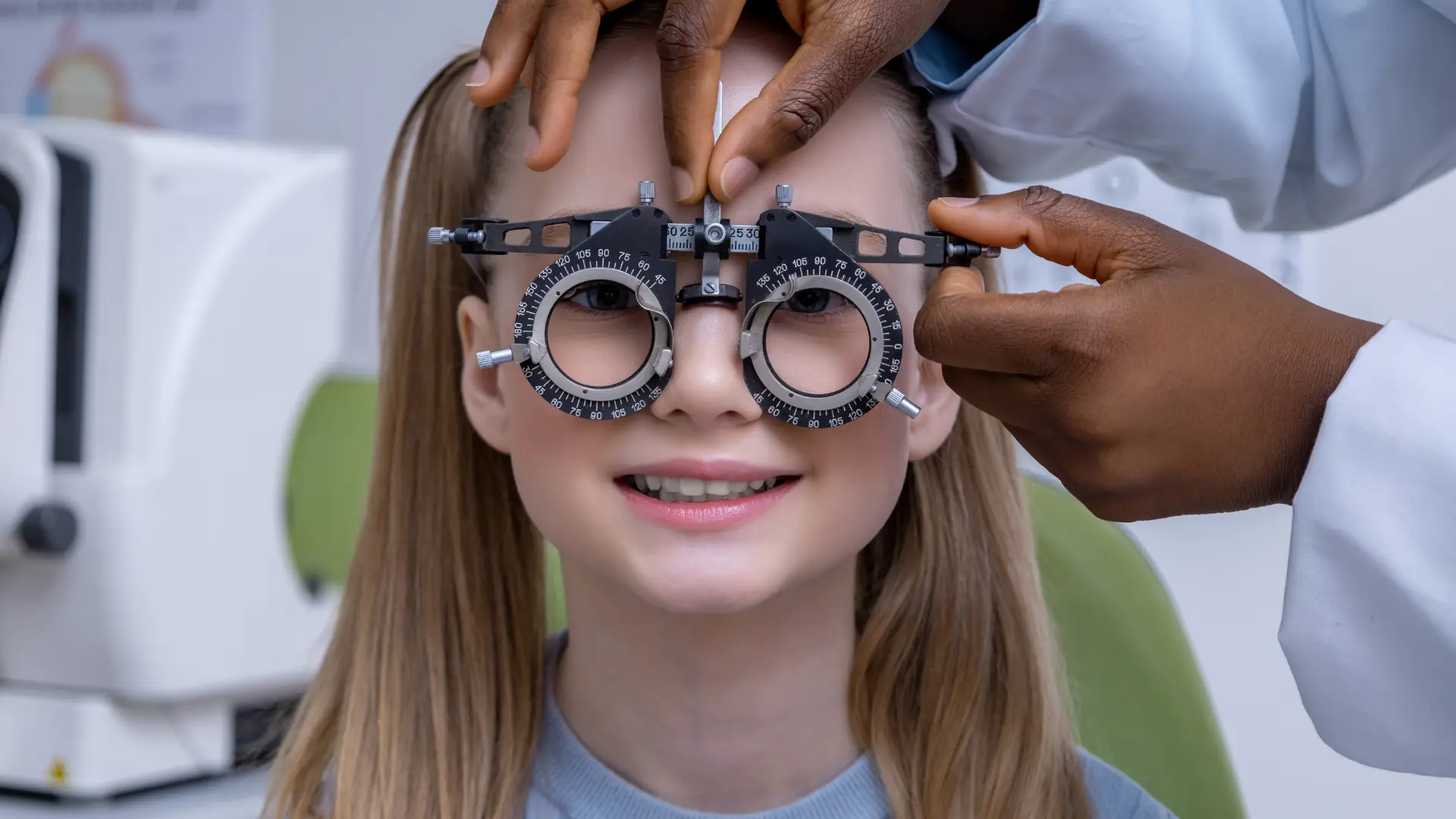
A comprehensive exam typically includes a prescription check, but it can also include tests for near focusing ability, eye alignment, and how well the eyes work as a team. Hakim Optical’sEye Exams page outlines how a full exam goes beyond “do you need glasses,” and can include checks for things like depth perception, focusing ability, and overall eye health. (Hakim Optical)
For students, the near-vision portion is often where useful answers show up. An optometrist may assess how the eyes move during tracking tasks, whether both eyes maintain alignment at near, and how quickly and comfortably focus adjusts between distances. The goal is to pinpoint whether the effort of reading is coming from an uncorrected prescription, a focusing stamina issue, an eye teaming issue, or a combination.
For a Canadian perspective on binocular vision challenges, the Waterloo Eye Institute explains that difficulties with focusing (accommodation), tracking (oculomotor control), or eye coordination (vergence) can make it hard to keep vision single and comfortable, especially during sustained near tasks like reading. (University of Waterloo)
What can help once you know what’s going on
The right plan depends on the findings, but the good news is that many reading-related visual issues are manageable once identified.
Sometimes the fix is straightforward: an updated prescription, or a near correction that reduces strain for close work. For other cases, the optometrist may recommend strategies to reduce visual fatigue during homework, like adjusting lighting and print size, or building in short breaks during reading blocks. If eye teaming or tracking is a key issue, the plan may include specific interventions and follow-up to track progress.
If headaches are part of the story, it is worth connecting the dots early. Hakim Optical’s article on the connection between eye strain and headaches highlights how unaddressed vision issues can contribute to recurring discomfort, and why a comprehensive exam is a smart starting point.
When it’s time to book, even if the chart looks “fine”
If a child consistently struggles with reading stamina, complains of blurry words, loses their place frequently, or avoids near work, it’s worth booking an exam that includes near-vision and binocular testing. The earlier you catch an issue, the easier it is to support school comfort and confidence.
And if you’re looking for care in Canada with convenient access to clinics, Hakim Optical has locations coast to coast. You can find a Hakim Optical store near you and choose a location that fits your schedule.
If you are specifically trying to book eye exams Toronto families can also explore Toronto-area options and pick a location that’s easiest for school-day logistics.
FAQs
Can my child have 20/20 vision and still struggle with reading?
Yes. 20/20 primarily reflects distance sharpness. Reading also relies on focusing, tracking, and eye coordination, which can be challenging even when the eye chart looks normal.
What are “eye tracking” problems in simple terms?
Eye tracking is the ability to move your eyes smoothly along a line of text and jump accurately from word to word. When tracking is inefficient, kids may lose their place, reread lines, or skip words without realizing it.
Is this the same as dyslexia?
Not necessarily. Dyslexia is a language-based reading difference. Vision issues do not cause dyslexia, but they can add extra difficulty and fatigue during reading. That’s why a comprehensive eye exam is a useful step when reading feels harder than it should.
What will an optometrist do differently for a reading concern?
In addition to checking prescription and eye health, eye exams can assess near-vision skills like focusing stamina, eye alignment at near, and how the eyes track during close work.